
― By Dona Bertarelli
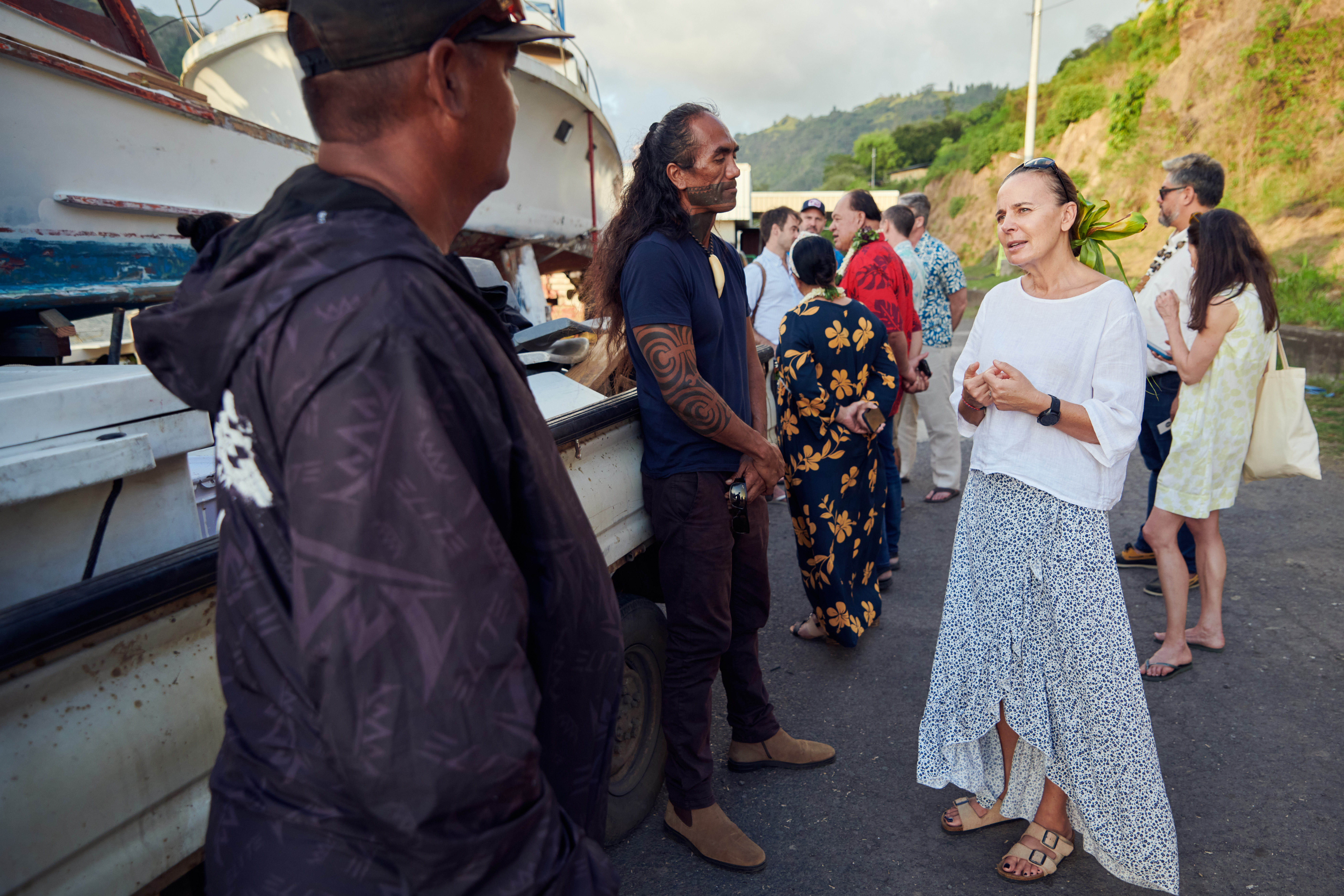
Last month, I had the pleasure of returning to French Polynesia since the announcement of the Marine Protected Area (MPA). This was a deeply personal experience, as for more than a decade, this region has been central to my commitment to the ocean through Pew Bertarelli Ocean Legacy. It is a unique place where science, local traditions, and stewardship meet, and where ambition for protection has been matched by a willingness to work patiently and collectively for the greater good.
AN OCEAN OF GLOBAL IMPORTANCE
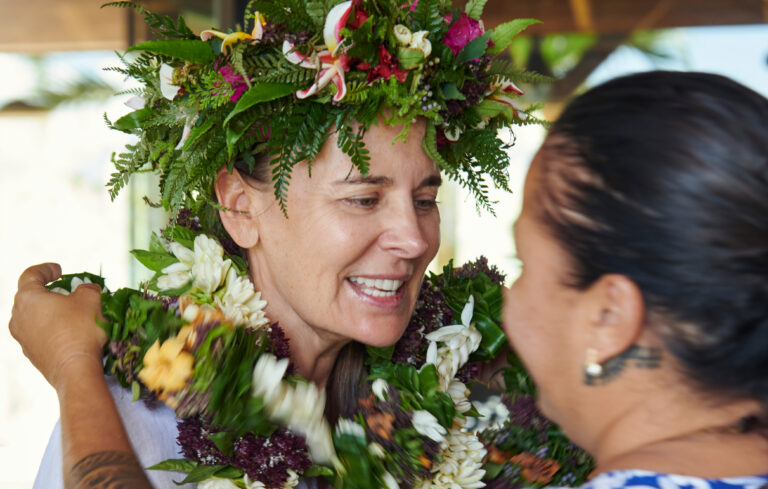
French Polynesia’s ocean territory is extraordinary in scale and significance. Every time I set foot on this land, the cultural and physical omnipresence of its surrounding ocean is impossible to ignore. Covering nearly five million square kilometers, these waters host some of the most biodiversity-rich marine ecosystems on the planet and play a vital role in global ocean health and in the lives of the people who depend on it. With the designation of the Tainui Atea MPA announced at UNOC in June 2025, there is now a shared vision to protect this natural heritage over the long term. And with 1.1 million square kilometers already highly and fully protected, and more expected to follow, French Polynesia has set an ambitious trajectory that reflects the importance of these waters and could very well become a model, in both scale and collective governance, for the rest of the world.
Ambition has guided this journey so far. The focus now is on ensuring it translates into lasting outcomes.
A RELATIONSHIP ROOTED IN CULTURE
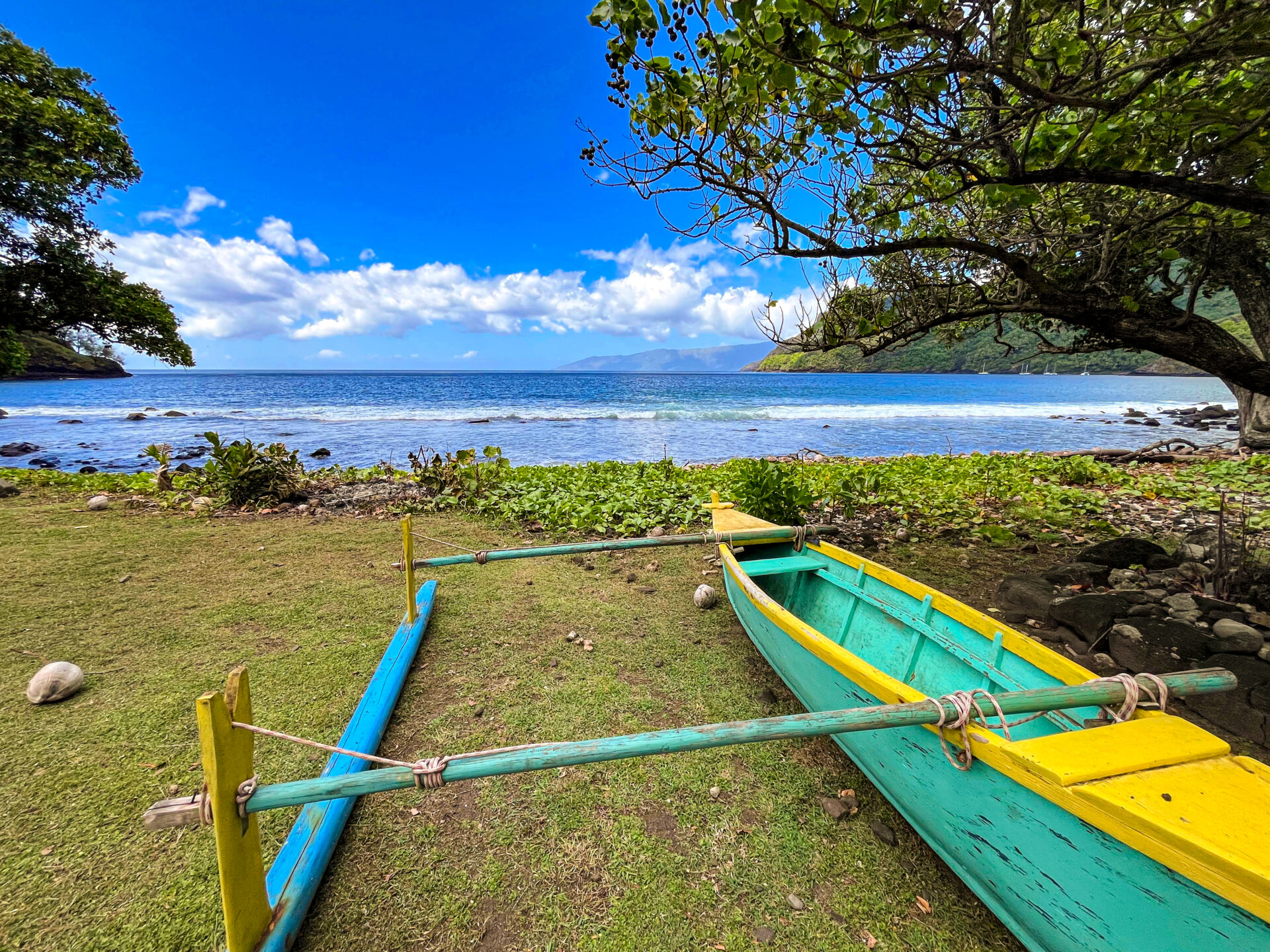
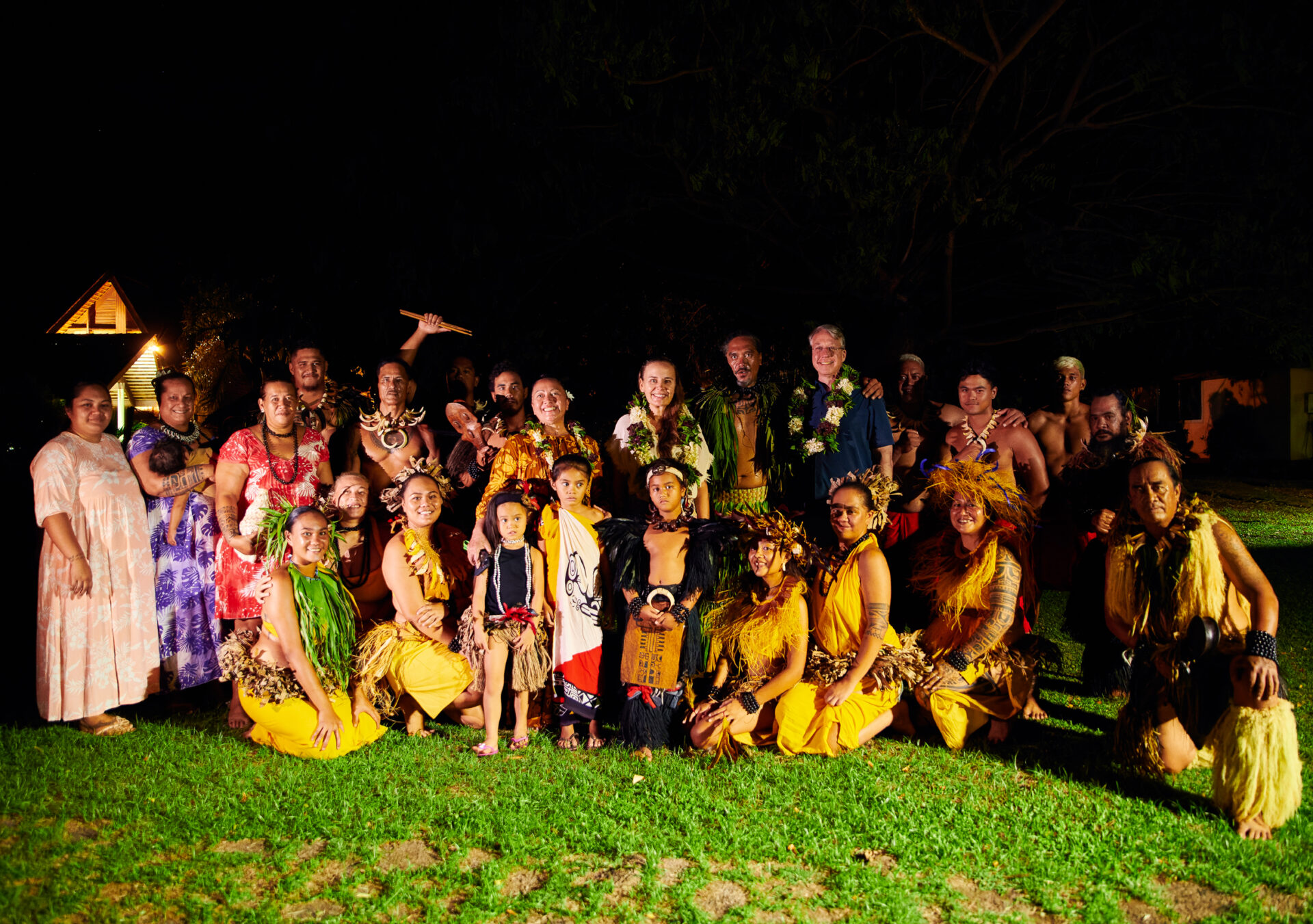
Being on the ground, meeting local communities, leaders, environmental NGOs, as well as traditional dancers, singers, tattoo artists, craftspeople and both artisanal and industrial fishers, reinforced a conviction I have held for many years. Through these conversations, and through visits to places of cultural resonance, such as the UNESCO site of Upeke or moments of shared traditional dance with the youth of Tahuata, one thing was clear: in French Polynesia, the relationship between people and the ocean is not theoretical. It is cultural, economic, and spiritual. The wisdom that they have to protect their islands is so inspiring.
FROM DESIGNATION TO DELIVERY
This is why partnership sits at the heart of my commitment here. The progress achieved so far has been built with the leadership of the government of French Polynesia, under President Moetai Brotherson, and through close collaboration with local mayors across the archipelagos. Their role is essential in ensuring that protection is not only ambitious, but legitimate and grounded in local priorities, an approach we must ensure continues into the future.
The next phase, underway, from designation to implementation, marks a decisive step. Governance frameworks are being developed, sustainable funding secured, and mechanisms are being put in place to ensure that protection delivers measurable ecological benefits for both people and nature.
TURNING PRIORITIES INTO LASTING IMPACT
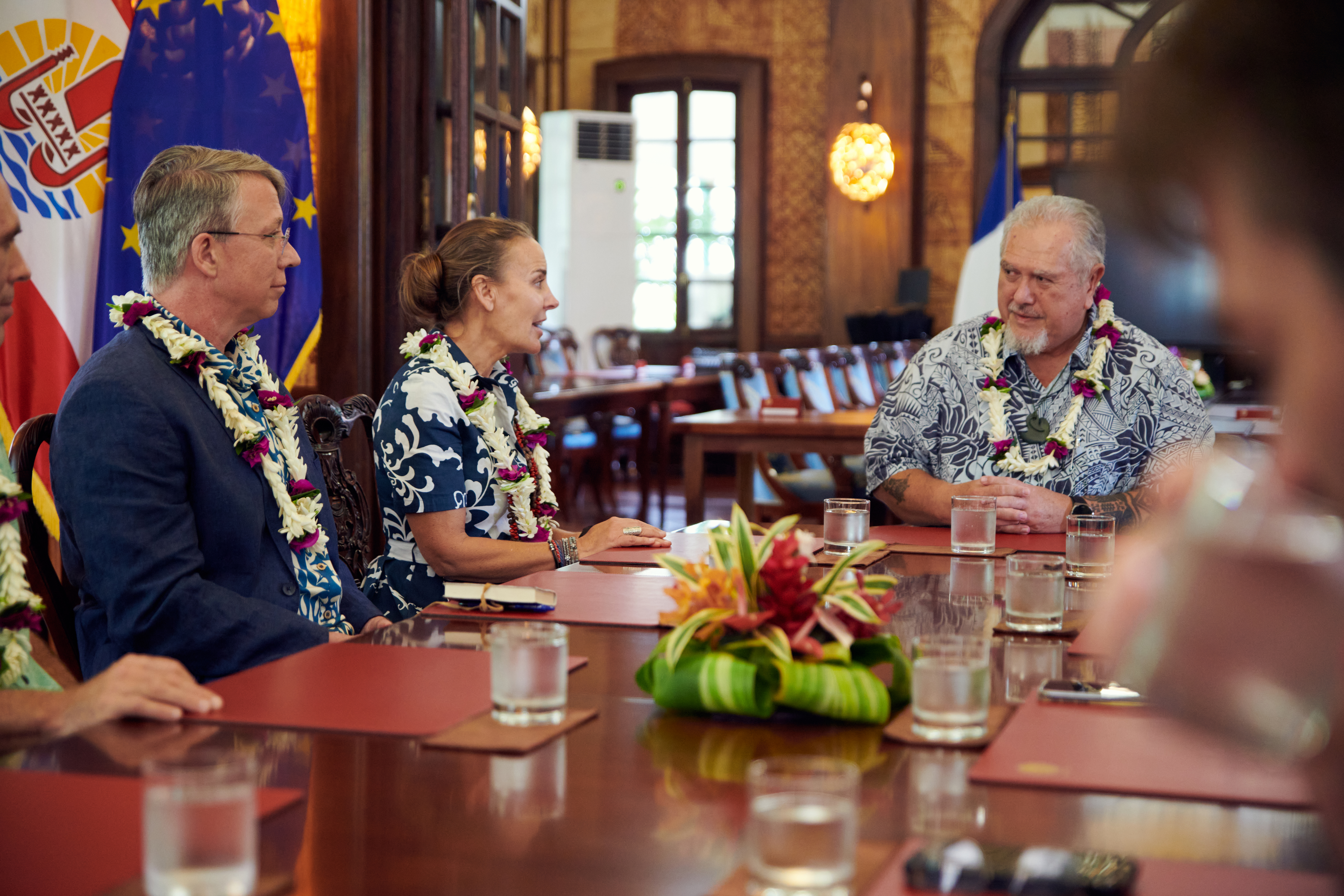
In this context, Pew Bertarelli Ocean Legacy helped facilitate the creation, and is an active member, of the Te Moana Collective, an international coalition of organizations, established in June 2025 alongside the Becht Foundation, Bezos Earth Fund, Blue Marine Foundation, the Blue Nature Alliance, Oceans 5, and the Wyss Foundation. This coalition took part in the recent exchanges and working sessions, announcing a joint commitment of $15 million, which will play an essential role in enabling this shift from vision, designation to delivery.
Partners travelled to Gambier, within the newly designated marine protected area, to lead a series of technical discussions with the Minister of Environment, his team, and local leaders and ocean users, on what this long-term success will require. Four priorities now shape this next phase: reinforcing sovereignty and surveillance across the EEZ through improved tools, equipment, and training; grounding governance in culture by integrating traditional knowledge and rāhui into modern management and supporting local management committees; ensuring protection supports food sovereignty through responsible fishing practices; and advancing biodiversity and science through species conservation, reef-resilience monitoring, and the development of scientific diving. The quality of the work done by the local committee and its level of commitment to protect its precious ocean is absolutely thrilling, giving me confidence in the future. A few weeks later, President Brotherson also visited Gambier to finalize the management plan, which was unanimously approved, marking an important step towards an effectively implemented MPA.
SUSTAINING MOMENTUM TOGETHER

My commitment to French Polynesia has never been about short-term announcements. It is about remaining engaged over time. For twelve years, through Pew Bertarelli Ocean Legacy, I have supported a patient, science-based, and inclusive approach to ocean protection here. Returning at this pivotal moment reinforced both the emotional bond I feel with this place, and the responsibility that comes with it.
French Polynesia shows the world that large-scale ocean protection can be ambitious, credible, and inclusive of those who live with the ocean every day. Significant progress has been made in recent months, and the equally important work of implementation is now under way, sustained by continued leadership, trust, and collaboration. I remain fully committed to supporting this shared journey, alongside all stakeholders, to help ensure that the benefits emerging here are felt for generations to come.
There is a bright future for these islands to continue to preserve this paradise of natural beauty and understanding the natural wisdom that we all need to respect.
Māuruuru